Insights That
Move Your Mission
Forward.
Where strategy meets action. We deliver powerful insights, practical frameworks, and AI-driven solutions designed to help social impact leaders amplify their reach, fund their missions, and scale their operations sustainably. Every article is crafted to equip you with the knowledge and tools to lead with purpose and grow with confidence.
Schedule a Consultation


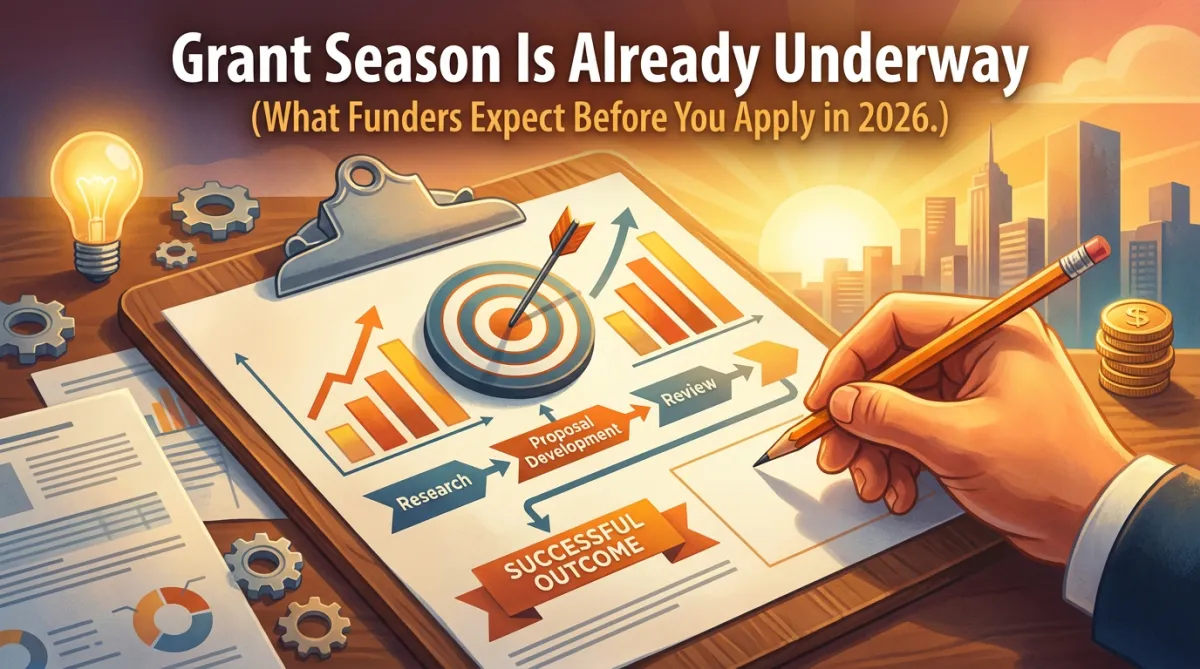
Grant Season Is Already Underway: What Funders Expect Before You Apply in 2026
The organizations winning grants in 2026 started preparing in 2025.
While most nonprofits scramble to meet application deadlines, top performers have already completed funder research, refined their narratives, assembled required documentation, and built relationships with program officers. By the time grant portals open, they're submitting polished proposals while competitors are still figuring out eligibility requirements.
This preparation gap determines who secures funding and who receives rejection letters.
Funders can immediately distinguish between organizations that treat grant seeking as strategic cultivation versus those approaching it as transactional paperwork. The difference shows in application quality, organizational readiness, and ability to articulate clear paths from funding to impact.
2026 brings heightened funder expectations across foundations, corporations, and government agencies. Economic pressures mean more organizations competing for limited resources. Funders responding to this reality by raising their standards, tightening eligibility criteria, and investing only in applicants demonstrating genuine capacity and alignment.
The grant applications succeeding this year won't be the ones submitted first or written most eloquently. They'll be the ones backed by organizations that understood funder priorities, built required infrastructure, and prepared comprehensively before ever opening an application form.
The Pre-Application Requirements Funders Don't Advertise
Most grant guidelines list obvious submission requirements: proposals, budgets, board lists, financial statements. But funders evaluate applicants against unstated criteria that determine whether applications receive serious consideration or immediate rejection.
Organizational Infrastructure tops the invisible checklist. Funders want to see functional boards that actually govern, financial systems that track restricted funds appropriately, program evaluation frameworks that measure outcomes, and operational policies that demonstrate professionalism.
Applications from organizations lacking basic infrastructure get declined regardless of mission alignment or program creativity. A brilliant idea paired with chaotic operations equals high risk in funder assessment.
Financial Health Indicators receive scrutiny before narrative content gets read. Funders review Form 990s, audited financial statements, and budget documents looking for red flags. Declining revenue, minimal cash reserves, outsized administrative costs, or unexplained deficits trigger immediate concern.
Organizations with questionable financial health rarely receive first-time funding. Existing grantees showing financial deterioration may lose renewal support. The time to address financial health issues is months before grant applications, not during the application process.
Digital Presence and Professional Materials signal organizational capacity. Funders research applicants online before making decisions. An outdated website, inactive social media, or lack of professional communications materials suggests limited capacity regardless of what the grant proposal claims.
This doesn't mean nonprofits need expensive branding or sophisticated marketing. It means maintaining current, accurate information about programs, impact, and leadership across public channels. Organizations impossible to research online create doubt about their legitimacy and sustainability.
Existing Funder Relationships provide context that strengthens applications. Referrals from trusted sources, track records with peer funders, or participation in collaborative initiatives offer third-party validation that new applicants can't provide.
Building these relationships takes time. Organizations starting relationship cultivation in January 2026 are positioning themselves for 2027 funding, not immediate grants. The nonprofits winning 2026 grants invested in relationship building throughout 2025.
What Changed in Funder Expectations for 2026
Grant making in 2026 reflects evolved priorities shaped by recent years of economic volatility, social change demands, and increased accountability pressures on foundations themselves.
Equity and Inclusion Requirements have moved from optional enhancements to baseline expectations. Funders want to see diversity across leadership, boards, and staff. They expect culturally responsive program design and evidence of authentic community engagement in decision making.
Organizations treating diversity as window dressing rather than operational reality face skepticism. Funders can distinguish between genuine equity work and performative statements. The presence of diverse faces on websites doesn't substitute for inclusive governance structures and community-centered program development.
Impact Measurement Standards continue tightening. Vague promises about "changing lives" or "building community" no longer satisfy. Funders expect specific, measurable outcomes tied to clear indicators. They want to see baseline data, progress benchmarks, and evidence of evaluation capacity.
Organizations that haven't invested in program evaluation struggle to compete against applicants presenting concrete data about effectiveness. Claiming impact without documentation raises questions about accountability and learning capacity.
Sustainability Planning receives greater emphasis as funders move away from creating long-term dependencies. Grant applications must articulate paths to financial sustainability beyond foundation support. Revenue diversification, earned income strategies, and plans for reducing reliance on grants strengthen applications significantly.
Funders increasingly prefer supporting organizations building sustainable models over those requiring perpetual subsidy. The question isn't whether foundation support is needed now, but whether it's building toward organizational independence.
Collaborative Approaches attract funding while isolated efforts face skepticism. Funders want to see organizations working in coalition, avoiding duplication, and coordinating with others serving similar populations. Partnership letters, MOUs with complementary organizations, and participation in collective impact initiatives demonstrate collaborative orientation.
The myth of the heroic solo organization solving complex problems alone no longer resonates with sophisticated funders. They recognize that systemic challenges require coordinated responses.
The Documentation That Separates Prepared From Unprepared Applicants
When grant portals open, prepared organizations upload required documents within hours. Unprepared applicants spend weeks gathering materials, often submitting incomplete applications or missing deadlines entirely.
Current Financial Statements should be readily available and professionally prepared. Most funders require balance sheets, income statements, and cash flow reports covering recent periods. Organizations lacking current financials or relying on outdated figures signal weak financial management.
Program Budgets need to reflect actual costs, realistic revenue assumptions, and clear expense categories. Funders recognize unrealistic budgets immediately. Understating costs suggests poor planning. Overstating revenue indicates wishful thinking. Either approach undermines credibility.
Logic Models or Theories of Change articulate how program activities connect to intended outcomes. These frameworks demonstrate that organizations have thought rigorously about their work rather than operating on assumptions and good intentions.
Creating effective logic models requires time and often facilitation support. Organizations attempting to develop them during grant application cycles produce rushed, unconvincing frameworks. The work should happen during program design, months before grant seeking begins.
Board Resolutions and Organizational Policies may be requested to verify governance practices. Active, engaged boards pass resolutions authorizing grant applications and major initiatives. Policies covering conflicts of interest, whistleblower protections, and document retention demonstrate organizational maturity.
Nonprofits discovering they lack required policies during application submission can't create legitimate policies overnight. These governance foundations require board approval and implementation time.
Letters of Support from partners, beneficiaries, and community stakeholders validate organizational impact and relationships. Generic letters from disconnected supporters add little value. Specific letters from meaningful partners describing actual collaboration strengthen applications considerably.
Securing quality support letters requires advance notice and relationship capital. Organizations requesting letters with 48-hour turnarounds receive rushed, superficial responses if they receive responses at all.
The Strategic Research That Happens Before Application
Successful grant seeking begins with thorough research long before writing proposals.
Funder Mission Alignment requires deep analysis beyond surface-level program descriptions. What issues do they actually fund versus what they claim to prioritize? Where do they make exceptions to stated guidelines? Which applications from previous years received support?
This intelligence comes from studying tax returns, analyzing grant databases, reviewing funded project announcements, and networking with previous grantees. Organizations that invest research time before applying target efforts strategically rather than spray proposals broadly.
Geographic and Population Priorities often appear in guidelines but contain nuances discovered through deeper investigation. A funder stating interest in "youth development" might heavily favor specific age ranges, intervention types, or community contexts. Applications missing these preferences get declined despite technical eligibility.
Funding Amount Sweet Spots vary by funder despite stated ranges. Some foundations rarely award maximum amounts to first-time grantees. Others prefer fewer, larger grants over many small investments. Understanding these patterns prevents requesting amounts that trigger automatic skepticism.
Application Timing Strategies matter more than many organizations realize. Some funders review applications on rolling bases and exhaust budgets early in cycles. Others save resources for later submissions to see full applicant pools. Strategic timing based on funder patterns improves success rates.
Program Officer Relationships provide insights no amount of independent research can match. Conversations with foundation staff before applying can reveal unstated priorities, clarify confusing guidelines, and gauge genuine interest in an organization's work.
Many nonprofits fear "bothering" program officers or assume foundation staff are too busy for pre-application conversations. But most program officers welcome early dialogue with serious applicants. These conversations prevent wasted effort on misaligned applications and help funders identify promising prospects.
Building the Organizational Foundation Funders Trust
Beyond specific documentation, funders assess whether organizations demonstrate characteristics of reliable partners.
Communication Professionalism shows in every interaction. Emails with typos, missed follow-up commitments, or unclear questions create doubt about organizational capacity. Conversely, timely, professional communication builds confidence before formal applications get submitted.
Transparency About Challenges paradoxically strengthens trust. Organizations pretending everything is perfect raise suspicion. Nonprofits that acknowledge genuine challenges while demonstrating plans to address them appear realistic and self-aware.
Responsiveness to Feedback matters for organizations with prior funder relationships. Grant makers notice which grantees implement suggestions from previous cycles and which ignore guidance. Responsiveness signals coachability and commitment to improvement.
Realistic Timelines in proposed projects demonstrate understanding of implementation complexity. Overly ambitious timelines that promise transformational change in unrealistic periods suggest inexperience or dishonesty.
Staff Capacity Alignment between proposed activities and available personnel prevents obvious disconnects. Applications describing extensive programs while disclosing minimal staff raise immediate questions about feasibility.
Funders have seen countless proposals promising more than organizations can deliver. The applicants that win trust are those whose plans match their capacity and who demonstrate awareness of their own limitations.
The Cost of Unpreparedness in Competitive Grant Cycles
Organizations submitting unprepared applications don't just fail to win funding. They damage future prospects.
Foundation Relationships suffer when organizations submit poor quality applications. Program officers remember applicants who waste their time with inappropriate requests or incomplete materials. These negative impressions persist across funding cycles.
Organizational Reputation within funding communities spreads through informal networks. Foundation staff discuss applications with peers. Nonprofits known for sloppy grant seeking find doors closing across multiple funders.
Internal Resources get squandered on rushed applications with low success probability. Staff time spent on poorly planned grant proposals could have been invested in relationship building, program improvement, or strategic research yielding better long-term results.
Opportunity Costs compound as organizations chase inappropriate funding while missing better-aligned opportunities. Limited development capacity should focus on high-probability prospects, not scattershot applications to any funder with tangential mission alignment.
The organizations winning consistent grant support don't apply more often. They apply more strategically to better-matched funders after thorough preparation.
Position Your Organization for Grant Success in 2026
Grant season doesn't begin when portals open. It begins months earlier with strategic preparation, organizational strengthening, and funder relationship building.
Nonprofits and social enterprises ready to compete successfully for 2026 funding need expert guidance on funder expectations, application preparation, and organizational readiness assessment.
Book a discovery call today:
https://api.leadconnectorhq.com/widget/bookings/discovery-session-img
Book a discovery call today!
Impctrs Management Group specializes in grant readiness consulting that helps organizations build the infrastructure, documentation, and strategies funders expect. Stop submitting applications that get declined and start winning grants that fund sustainable impact.
Keywords: grant season 2026, funder expectations 2026, nonprofit grant readiness, foundation grant requirements, grant application preparation, nonprofit funding strategy, grant writing success, foundation funding priorities, nonprofit grant research, grant proposal preparation
JOIN OUR MAILING LIST
